Outdoor Pickleball vs Indoor Pickleball
As the popularity of pickleball continues to grow, players are faced with a crucial decision: whether to play outdoors or indoors. While the objective of the game remains the same, the environment and equipment can significantly impact the experience. In this article, we'll explore the key differences between outdoor and indoor pickleball, including ball type, court surface, and gameplay.
The Ball: A Key Differentiator
The USA Pickleball Association (USAPA) sets standards for pickleball sizes and materials. Outdoor pickleballs have 40 holes, while indoor pickleballs have 26 holes. The additional holes on outdoor balls help to reduce wind resistance, making them more stable in windy conditions. The type of plastic used can also affect the ball's flight and bounce. Common types of plastic used include:
- Polyethylene (PE): A rigid and durable plastic often used for outdoor balls.
- Polypropylene (PP): A flexible and lightweight plastic often used for indoor balls.
- Thermoplastic Elastomer (TPE): A flexible and durable plastic used in some eco-friendly pickleball balls mainly meant for indoors.
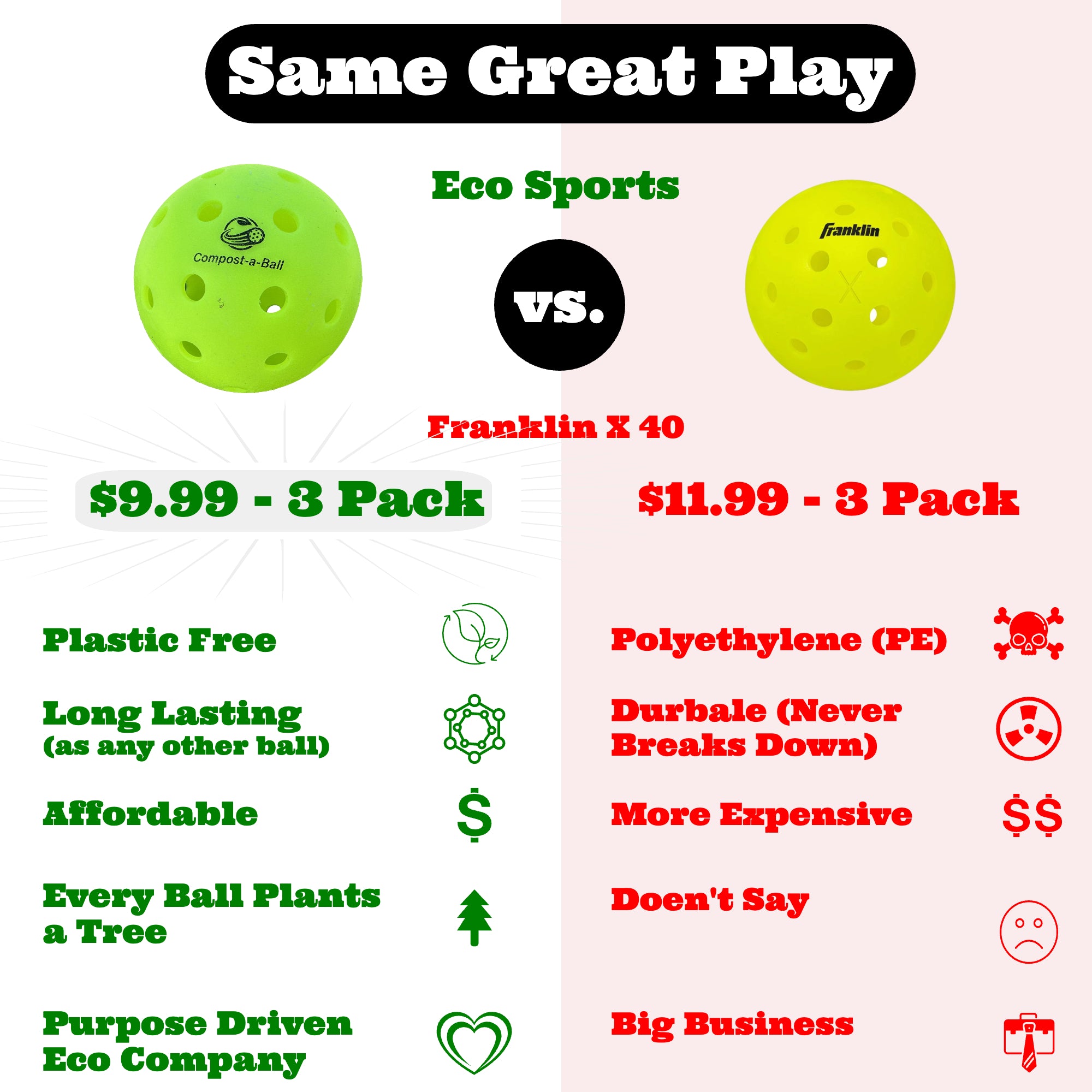
- Wood Fiber & BioBased Plastic Free Pickleballs: this outdoor 40 hole ball from Eco Sports & Core is the best outdoor pickleball game and just so happens to be better for the planet.

Eco Sports, a popular pickleball manufacturer, uses a compostable material for their outdoor balls. This eco-friendly approach not only reduces waste but also affects the ball's bounce and durability. The compostable material tends to be softer and more prone to scratches, which can impact the ball's aerodynamics and overall performance.
Court Surface: A Crucial Factor
The court surface is another significant difference between outdoor and indoor pickleball. Indoor courts can be played on a variety of surfaces, including:
-
Smooth surfaces: Basketball courts, gymnasiums, and indoor sports facilities with smooth, even surfaces. These surfaces provide a consistent bounce and are often preferred for indoor play.

-
Asphalt or similar surfaces: Indoor courts that are converted from outdoor pickleball courts or have a similar surface. These surfaces can be harder on joints and may affect the ball's bounce.

Outdoor courts, on the other hand, are typically played on asphalt, concrete, or a similar hard surface. These surfaces can be unforgiving on joints and muscles, especially for players who are new to the game.
Gameplay and Ball Flight
The combination of ball type and court surface significantly impacts gameplay. Outdoor pickleballs with 40 holes and a heavier construction tend to fly more consistently in windy conditions. The added weight and stability of outdoor balls also make them less affected by wind and other environmental factors.
Indoor pickleballs, with their 26 holes and lighter construction, are more suitable for play on smooth surfaces. The reduced wind resistance and lighter weight make them more responsive to player movements and shots.
Choosing the Right Equipment and Court
When deciding between outdoor and indoor pickleball, consider the following:
- Outdoor play: Use a ball with 40 holes and a durable plastic, such as PE, PP, or Wood Fiber. Play on an asphalt or similar surface.
- Indoor play: Use a ball with 26 holes and a lighter plastic, such as PP or TPE. Play on a smooth surface, such as a basketball court.
Ultimately, the choice between outdoor and indoor pickleball comes down to personal preference and playing style. By understanding the differences in ball type, court surface, and gameplay, players can make informed decisions and enjoy the game to the fullest. Whether you're a seasoned pro or just starting out, there's a type of pickleball out there for everyone.