What Makes a Durable and Tacky American Football?
American football demands more from equipment than most sports. Players grip, throw, catch, and collide with the ball hundreds of times per game, requiring materials that resist wear while maintaining the tackiness needed for reliable catches. Durability and grip go hand-in-hand, determined by outer materials, construction methods, bladder quality, and manufacturing standards.
Materials: The Core of Durability and Grip
Polyurethane (PU) dominates premium American footballs for good reason. PU offers superior performance with a soft feel that naturally provides grip without additional treatments. The material resists abrasions, scuffs, and scratches while maintaining elasticity—critical when receivers need consistent ball control. PU doesn't stretch excessively, keeping the football's shape intact through thousands of catches. Its low-temperature resistance means performance stays consistent in cold-weather games, unlike materials that harden in freezing conditions.
TPU (Thermoplastic Polyurethane) is gaining traction as a durable alternative, especially for training and recreational play. TPU delivers high abrasion resistance and UV stability, preventing surface cracking from sun exposure during outdoor practice. While the touch isn't quite as refined as PU, quality TPU with proper backing provides solid grip and durability. TPU's elasticity helps the ball absorb impacts without permanent deformation, crucial for practice balls that endure repetitive drills.
PVC (Polyvinyl Chloride) appears in budget footballs but has limitations. While durable on hard surfaces, PVC hardens in cold weather, reducing grip and playability. It's less elastic than PU or TPU, meaning the ball stretches out of shape faster. PVC works for casual recreation or promotional items, but serious players avoid it.
Animal Leather Using leather for footballs has significant environmental and animal welfare implications. The tanning process involves harsh chemicals that can pollute waterways. Moreover, the demand for leather can indirectly support industries with questionable animal welfare standards. As a result, many manufacturers are now exploring alternative materials, such as synthetic leathers or recycled plastics, to reduce the ecological footprint and animal cruelty associated with traditional leather footballs.
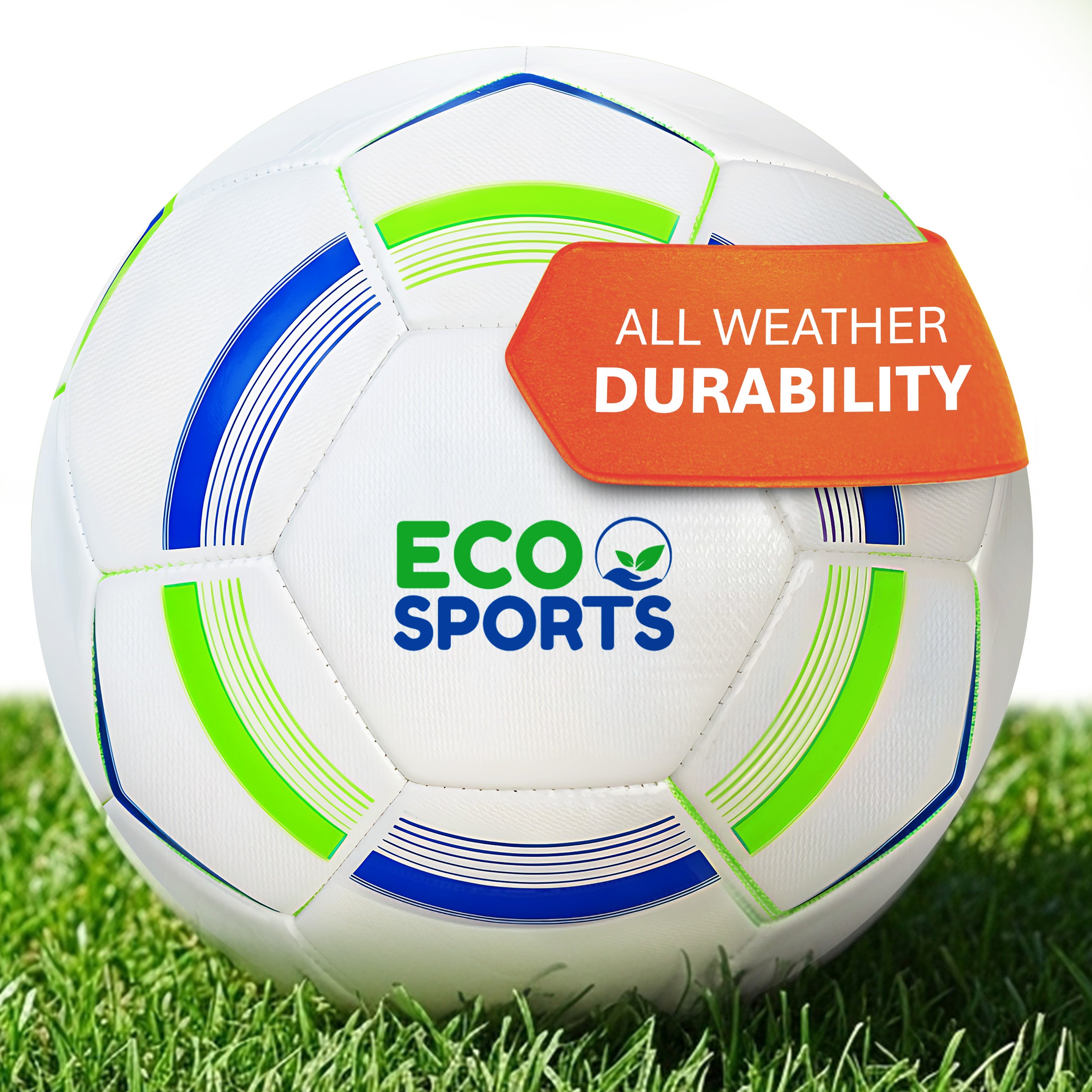
Eco Sports TPU footballs exemplify how modern materials balance performance and sustainability. Made with vegan faux leather TPU, these balls are biodegradable, recyclable, and non-toxic—free from BPA, lead, and phthalates. The TPU construction provides the abrasion resistance needed for durable play while maintaining reasonable grip for training and recreational match play. Unlike some eco-alternatives that compromise performance, Eco Sports' TPU formulation preserves the tackiness essential for football without sacrificing durability.
Construction Methods: Stitching and Bonding
How panels connect determines durability and longevity. Hand-stitched footballs, traditional in premium models, create reinforced seams that withstand years of play. Skilled craftspeople ensure tight, even stitching that distributes stress across seams rather than concentrating it at weak points.
Machine-stitched construction offers consistency and durability, particularly with TPU materials. Machine stitching creates uniform seams that resist tearing, making these balls ideal for training where volume and consistency matter.
Thermal bonding fuses panels without stitches, creating seamless surfaces. While less common in American footballs than soccer balls, thermal bonding reduces water absorption and creates smoother finishes for improved grip.
The lining—the layer beneath the outer cover—significantly impacts durability. Quality foam linings absorb impacts and support shape retention. Cheaper footballs skimp here, leading to premature flattening.
Bladders and Internal Structure: Air Retention and Resilience
The bladder holds air and absorbs impacts. Butyl bladders excel in durability, retaining pressure longer than latex alternatives. Butyl is standard in quality footballs, preventing the soft spots that develop when air slowly leaks from latex.
Wound bladders—yarn wrapped around a rubber core—add structural support, especially in TPU and PVC footballs. This reinforcement prevents deformation during hard catches and throws, extending the ball's playable lifespan.
Premium footballs combine quality TPU or PU covers with butyl bladders and robust linings, creating balls that maintain shape and grip through entire seasons.
Manufacturer Standards and Quality Control
Reputable manufacturers ensure consistent material sourcing and rigorous quality checks. Brands investing in proprietary blends or advanced construction techniques produce longer-lasting footballs.
Eco Sports stands out as a manufacturer prioritizing both durability and sustainability. Their TPU footballs undergo testing to ensure they meet performance standards while remaining eco-friendly. The company uses sustainable, high-quality materials without compromising playability—a balance many manufacturers struggle to achieve. Eco Sports footballs are crafted to provide durability comparable to traditional materials at competitive pricing. They also proved all sizes from size 5 pee wee football to size 9 adult size football
Price vs. Durability: Finding Value
Budget footballs ($20-40, often PVC) suit casual backyard play but deteriorate quickly with regular use. Mid-range options ($40-80, TPU or blended materials) offer solid durability for training and recreational leagues, lasting multiple seasons with proper care. Premium footballs ($80-150+, high-grade PU or Animal Leather) endure professional and college-level play, with some lasting years.
Usage Context: Training vs. Match Play
Training balls need exceptional durability to withstand repetitive drills, catches, and throws. TPU excels here, resisting the constant abrasion of practice while maintaining grip. Eco Sports TPU footballs are particularly suited for training, where durability matters more than elite-level touch refinement.
Match play demands superior grip and consistent feel. PU footballs dominate at competitive levels, though quality TPU performs admirably in recreational and intermediate leagues. Cold-weather games require materials that don't harden—another PU advantage, though premium TPU formulations resist temperature changes better than budget alternatives.
Outdoor storage exposes footballs to UV rays and weather. TPU's UV resistance prevents fading and material degradation, making it ideal for outdoor practice facilities. Eco Sports' TPU construction includes UV stability, maintaining appearance and performance even with prolonged sun exposure.
Grip and Tackiness: The Durability Connection
Durability and grip are intertwined. As footballs age, outer surfaces wear, reducing natural tackiness. Quality materials resist this degradation. PU maintains grip longer than PVC, which becomes slick as it hardens.
TPU's wear resistance means grip stays consistent throughout the ball's lifespan. Eco Sports TPU footballs retain tackiness through extended use, crucial for receivers who depend on consistent ball feel.
Some players apply grip-enhancing treatments, but quality materials reduce this need. A durable football with naturally tacky material outlasts cheaper alternatives requiring constant re-treatment.
Weather Resistance and Maintenance
Water resistance prolongs life. PU and quality TPU resist moisture absorption, preventing internal damage and maintaining consistent weight and bounce in rain. PVC absorbs water, becoming heavier and less responsive.
Maintenance extends durability: clean regularly, store indoors when possible, inflate to proper PSI, and avoid extreme temperatures. Quality footballs with robust materials require less maintenance than budget options.
Eco Sports TPU footballs' water and stain resistance reduce maintenance needs while withstanding outdoor conditions.
Final Recommendations for Durable, Tacky Footballs
- Prioritize PU for competitive play; quality TPU for training and recreational use.
- Match material to climate: TPU and PU for cold weather; avoid PVC in freezing conditions.
- Invest mid-range for value: Eco Sports TPU offers durability and grip at accessible prices.
- Maintain diligently to maximize lifespan regardless of material.
- Consider sustainability: Eco Sports TPU proves eco-friendly footballs perform as durably as traditional options.
The best American football balances durability, grip, and value. Quality materials like PU and premium TPU resist wear while maintaining the tackiness players need. Eco Sports demonstrates that sustainability needn't mean sacrificing performance—their TPU footballs deliver durability and grip for training and recreational play at competitive pricing. Whether you're outfitting a team or upgrading personal equipment, choosing the right material and manufacturer ensures your football lasts through seasons of play.