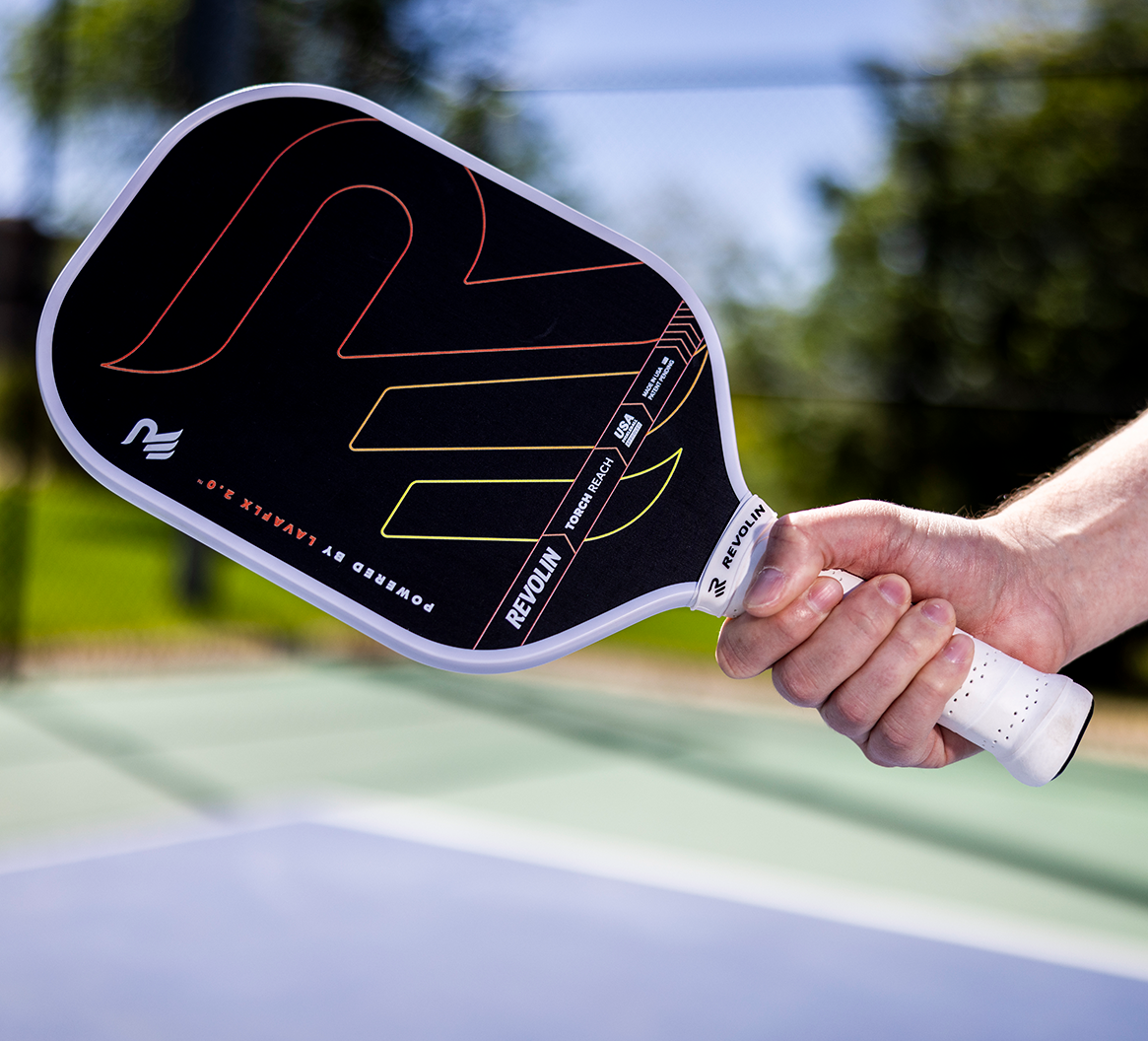
Pickleball has exploded in popularity across the United States, earning its title as America’s fastest-growing sport. With millions of new players picking up paddles each year, the sport is often celebrated for being accessible, social, and low-impact.
But there’s a question we should all be asking:
Is pickleball actually sustainable?
While pickleball may seem like a low-footprint activity compared to large-scale sports, its rapid growth is quietly creating environmental challenges—from plastic waste to resource-intensive court construction. Let’s break down the hidden impact and what can be done to make the sport greener.
The Environmental Footprint of Pickleball
At first glance, pickleball appears relatively eco-friendly. It doesn’t require massive stadiums, heavy equipment, or extensive travel at the recreational level. However, when you zoom out, the environmental footprint becomes more complex.
1. Plastic Pickleball Waste Is Adding Up
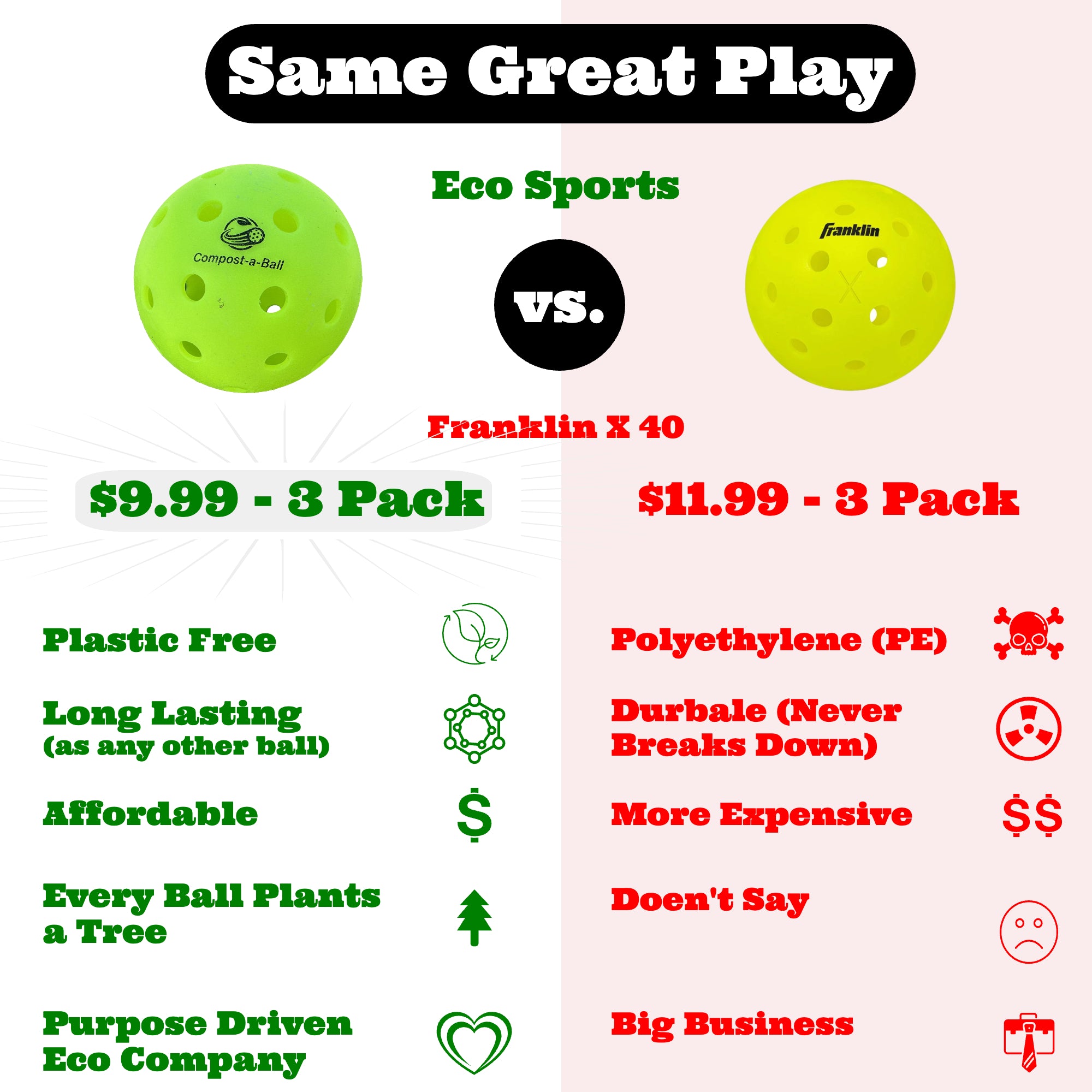
~500 million pickleballs are produced every year globally and they are typically made from hard plastic polymers, designed for durability and bounce. However, pickleballs crack and warp quickly—especially outdoor balls exposed to heat and rough surfaces.
- Frequent players can go through dozens of balls per year
- There is little to no widespread recycling infrastructure for pickleballs
- Most broken balls end up in landfills
Multiply this across millions of players, and the waste adds up quickly. In fact, this contributes ~77 million pounds of plastic waste annually.
2. Paddle Materials Are Not Always Eco-Friendly
Modern pickleball paddles are engineered for performance—but not necessarily for sustainability. Common materials include:
- Composite fiberglass
- Carbon fiber (note: less than 10% of carbon fiber is recycled globally)
- Polymer honeycomb cores (plastic-based)
These materials are difficult to recycle, energy-intensive to produce, and often bonded together in ways that prevent separation.
While high-performance paddles can last longer for the average player, cheaper paddles tend to wear out faster—leading to more waste over time. Not to mention, the professional-level players go through new paddles every two weeks or tournament.
3. Court Construction Has a Hidden Impact
One of the biggest environmental costs of pickleball comes from infrastructure.
New pickleball courts are being built rapidly across the country, often using:
- Concrete or asphalt bases
- Acrylic surface coatings
- Fencing, lighting, and amenities
Environmental concerns include:
- Carbon emissions from cement production
- Land use and habitat disruption
- Increased noise pollution in residential areas
- Energy use from lighting for night play
As demand grows, so does the pressure to build more courts—amplifying these impacts.
4. Apparel & Accessories Add to the Footprint
Like many sports, pickleball comes with a growing market for:
- Athletic apparel
- Shoes
- Bags and accessories
Most conventional activewear is made from synthetic fibers like polyester, which are derived from fossil fuels and shed microplastics over time. Not to mention, synthetic textiles, like polyester, end up in landfills and take 200+ years to break-down. The volume of new companies emerging in the pickleball space is also contributing to increased consumer product waste.
Why Growth Matters: Scale Changes Everything
Pickleball’s sustainability challenge isn’t just about materials—it’s about scale.
- The sport has grown over 200% in recent years
- Millions of new players are entering the market
- Demand for gear, courts, and apparel is surging
Even if each individual item has a relatively small footprint, the cumulative impact is significant.
Is Pickleball More Sustainable Than Other Sports?
In some ways, yes. Compared to sports like golf, motorsports, or skiing, pickleball:
- Requires less land per player
- Has lower travel requirements (especially recreationally)
- Uses minimal water
However, compared to ultra-low-impact activities (like running or bodyweight fitness), pickleball still relies heavily on manufactured equipment and infrastructure.
Bottom line: It’s not the worst offender—but it’s far from impact-free.
How to Make Pickleball More Sustainable
The good news? There are clear ways players, brands, and communities can reduce pickleball’s environmental footprint.
1. Choose Longer-Lasting Gear - Investing in higher-quality paddles and balls reduces replacement frequency and waste, especially if leveraged by recreational players. Our recommendation is to use equipment to the fullest. Just because the professionals are replacing their paddles as frequently as two weeks, does not mean every recreational player should feel they need to as well.
2. Look for Sustainable Materials - Emerging innovations include:
- Recycled composite materials
- Bio-based resins
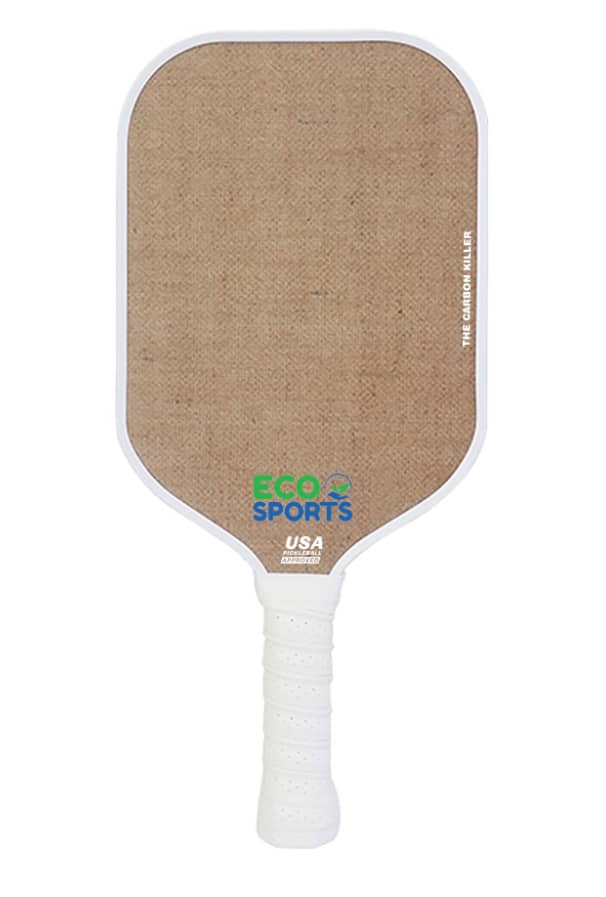
- Wood or hybrid paddles
- Plant (e.g., flax fiber) or natural-derived materials (e.g., lava rock)
While still niche, these options are growing.
3. Reduce Pickleball Waste
- Rotate balls to extend lifespan
- Repurpose cracked balls (training drills, ball machines, art, etc.)
- Support brands exploring recyclable or compostable pickleball designs

4. Wear Sustainable Apparel - Choose activewear made from:
- Organic cotton
- Recycled polyester or synthetics able to be biodegraded (e.g., Definite Articles CICLO technology)
- Natural fibers like hemp
This helps cut down on microplastic pollution and fossil fuel use.
5. Support Eco-Conscious Brands - Consumer demand drives change. Supporting companies focused on sustainability encourages innovation across the industry and propels the world into a brighter future.
The Future of Sustainable Pickleball
As pickleball continues to grow, the industry has an opportunity to evolve in a more sustainable direction.
Key areas of innovation include:
- Recyclable or biodegradable balls
- Circular paddle design (repairable or recyclable)
- Low-impact court materials
- Sustainable manufacturing processes
The next decade will be critical in determining whether pickleball becomes a model for sustainable sports—or another source of unnecessary waste.
So, Is Pickleball Sustainable?
Not by default—but it can be.
Like many modern sports, its environmental impact depends on how it’s played, produced, and scaled. With more mindful choices—from players to manufacturers—the sport has the potential to grow without compromising the planet.
At Eco Sports, we believe that enjoying the game and protecting the environment shouldn’t be mutually exclusive. That is why were offer more eco-friendly choices for the game you love!
Because the future of pickleball, and sports in general, shouldn’t just be about performance—it should be about responsibility too.